

Timeline
Global website launched in 2025 · Followed by ongoing improvements and multiple redesigns
My Role
Design Lead & Hands-on Designer
Working With
PM / Design Team / Local & Global Marketers / Front-end Development Team

Goal
Communicating Product Value Beyond Features
Unlike users in Korea, international audiences were less familiar with the product’s background and use cases, making it difficult to understand its differentiation through a feature-focused introduction alone. We therefore focused on communicating how the product could support users in their actual work, rather than simply listing its features.
A Website That Supports Both Marketing and Sales
During the early stages of global expansion, the website needed to serve not only as an introduction to the brand but also as a central touchpoint for marketing campaigns, sales conversations, and customer inquiries. Our goal was to create a website that could be used consistently across multiple business touchpoints.
Accommodating Market-Specific Content
Different markets required different features and messages to be emphasized, making a one-size-fits-all approach impractical. We aimed to maintain a consistent brand structure while allowing content to be adapted to the needs of each market.
Design Direction
I extended the existing brand design system into guidelines tailored for web implementation. While preserving the brand’s visual identity, I defined how it could be expressed across web pages to accommodate product information and a wide range of marketing content.
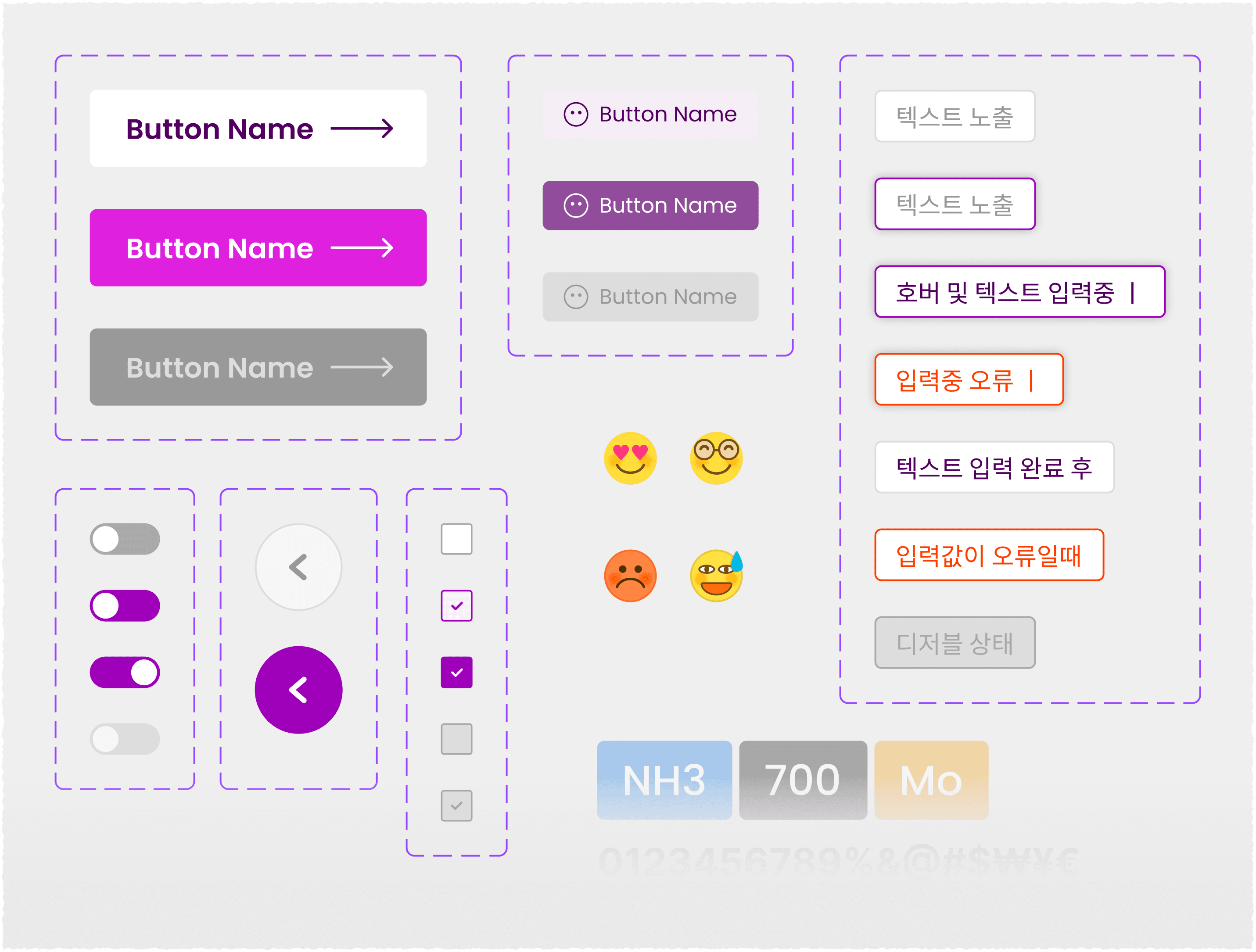
Website Guideline Examples
Structured Components
I organized content presentation into several patterns and translated them into reusable components. These components were designed to work across both Korean and global websites while allowing teams to combine and adapt them based on the content needs of each market.

Content Component Examples

Content Component Examples
Outcome
1. Created a Structure for Market-Specific Messaging
We designed the website so that key features and messages could be adjusted by market, supporting marketing activities tailored to different audiences.
2. Established an Official Touchpoint for International Customers
The global website provided international customers who were unfamiliar with the product with a dedicated place to explore the brand and understand its key use cases and value.
3. Supported Continuous Improvement and Redesign
After the initial launch, I continued to contribute to both hands-on design and cross-functional coordination, incorporating evolving content and marketing needs into ongoing website improvements.

Reflection
1. Collaboration with Marketers Starts Before the Design Request
Page priorities changed depending on the market, audience, and message we wanted to communicate. I learned that discussing messaging with marketers before moving into design was itself an essential part of the design process.
2. Recurring Changes Reveal Opportunities to Strengthen the System
As the website continued to evolve through improvements and redesigns, new content emerged that was difficult to accommodate within the existing structure. Rather than treating these as isolated page-level revisions, I learned to use them as signals for identifying where shared guidelines and components needed to evolve.
3. The Right Level of Standardization Determines a System’s Flexibility
If every structure is fixed, it becomes difficult to accommodate differences between markets. If every page is designed independently, however, the value of having a shared system diminishes. Defining what should remain consistent and what should adapt to the content became one of the key design challenges of the project.